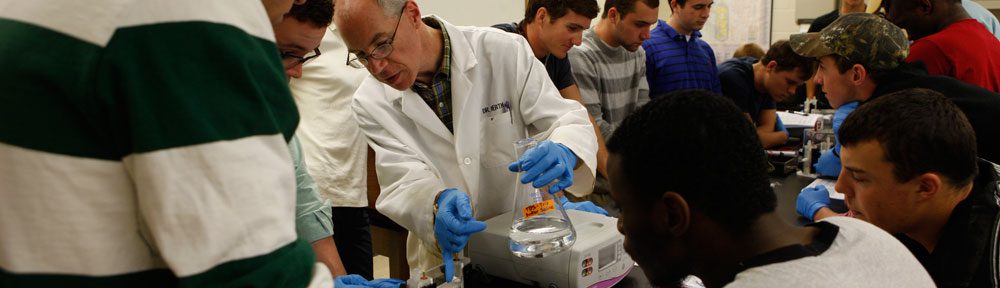
Dr. Bill Shear has been appointed to the advisory board of the Journal of Cave and Karst Studies, the scientific journal of the American Speleological Society. JCKS publishes research articles on geological, hydrological, biological and engineering aspects of caves and karst terrain. Karst terrain occurs wherever there are extensive deposits of limestone on the surface, and is charactrerized by subterranean drainage, caves and sinkholes. Dr. Shear will be advising on publications about the animals that inhabit spaces underground, and has himself discovered and named many species throughout the world found only caves. In addition to his new duties, Dr. Shear is an Associate Editor of Zootaxa, a megajournal of systematic biology that in 2010 published over 30,000 pages and accounted for about 20% of all new taxa of animals described that year. He is also on the editorial board of the Journal of Arachnology, and frequently reviews manuscripts for many other journals, including Naturwissenschaft, Nature, Science, and American Scientist.
Monthly Archives: February 2011
Studying and teaching human evolution
On Saturday, February 19, H-SC Biology Professor Alex Werth attended a special workshop, jointly hosted by the Human Origins Program of the Smithsonian Institution’s Anthropology Department (www.humanorigins.si.edu) and the National Evolutionary Sythesis Center (NESCent, www.nescent.org), on “Overcoming Stumbling Blocks to Communicating Human Evolution.” The workshop brought together forty scientists who write about, teach, and conduct research in paleoanthropology. Included were writers from magazines (like National Geographic and Discover), newspapers (like the New York Times and USA Today), and leading journals, plus expert anthropologists who study all aspects of human evolution, from fossil skulls to DNA, and a few professional educators, most of whom were in Washington, DC for the annual meeting of the American Association for the Advancement of Science (AAAS). Professor Werth was invited to the workshop because he has published articles on teaching human evolution (see http://uncw.edu/cte/et/articles/Vol9_2/Werth.htm).
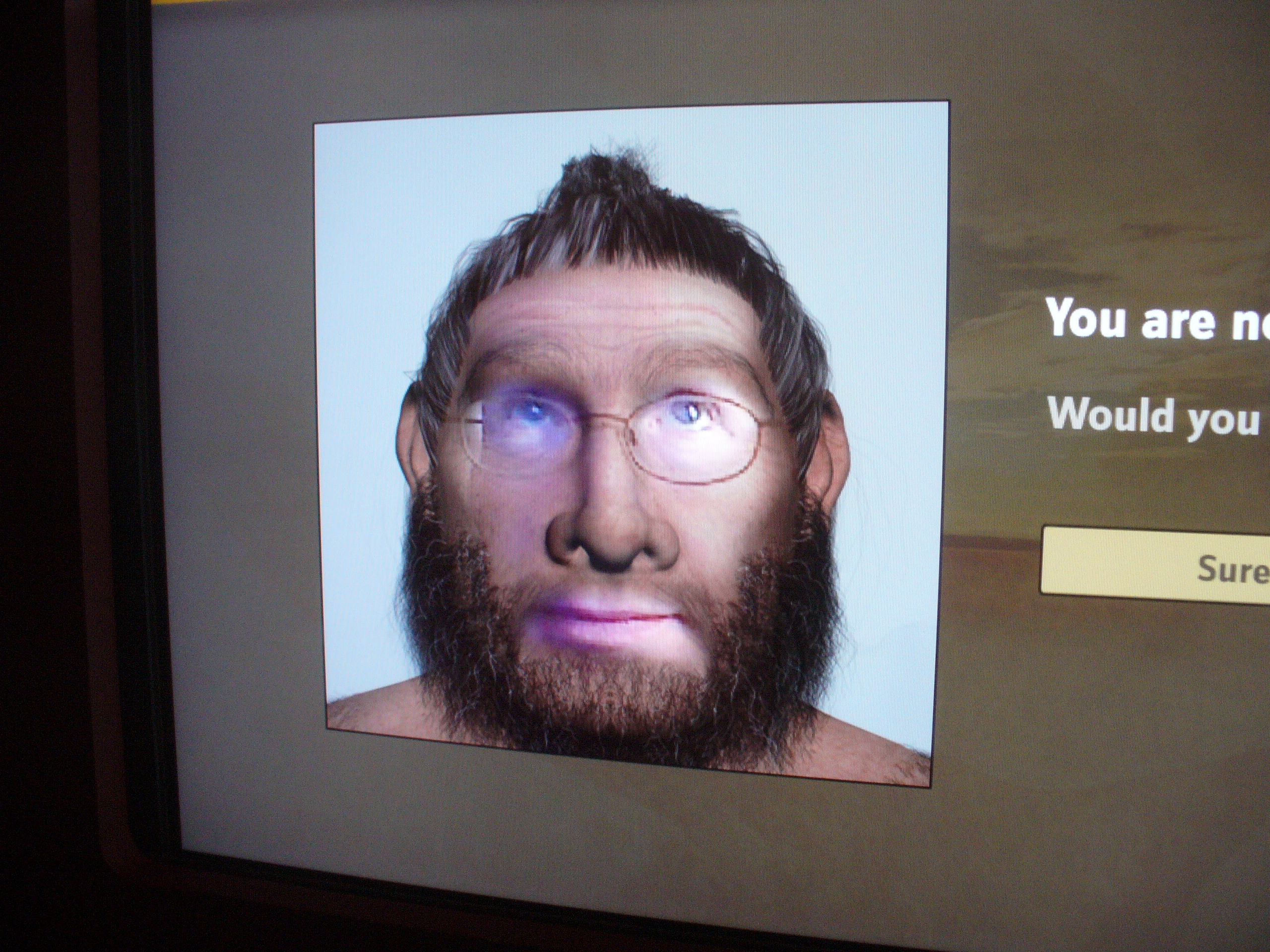
Professor Werth as a Neanderthal (with rare fossil eyeglasses)
Before the workshop the group enjoyed a private guided tour of the Smithsonian’s new Hall of Human Origins. Professor Werth also got to greet Francis Collins, Director of NIH and co-discoverer of the Human Genome Project.
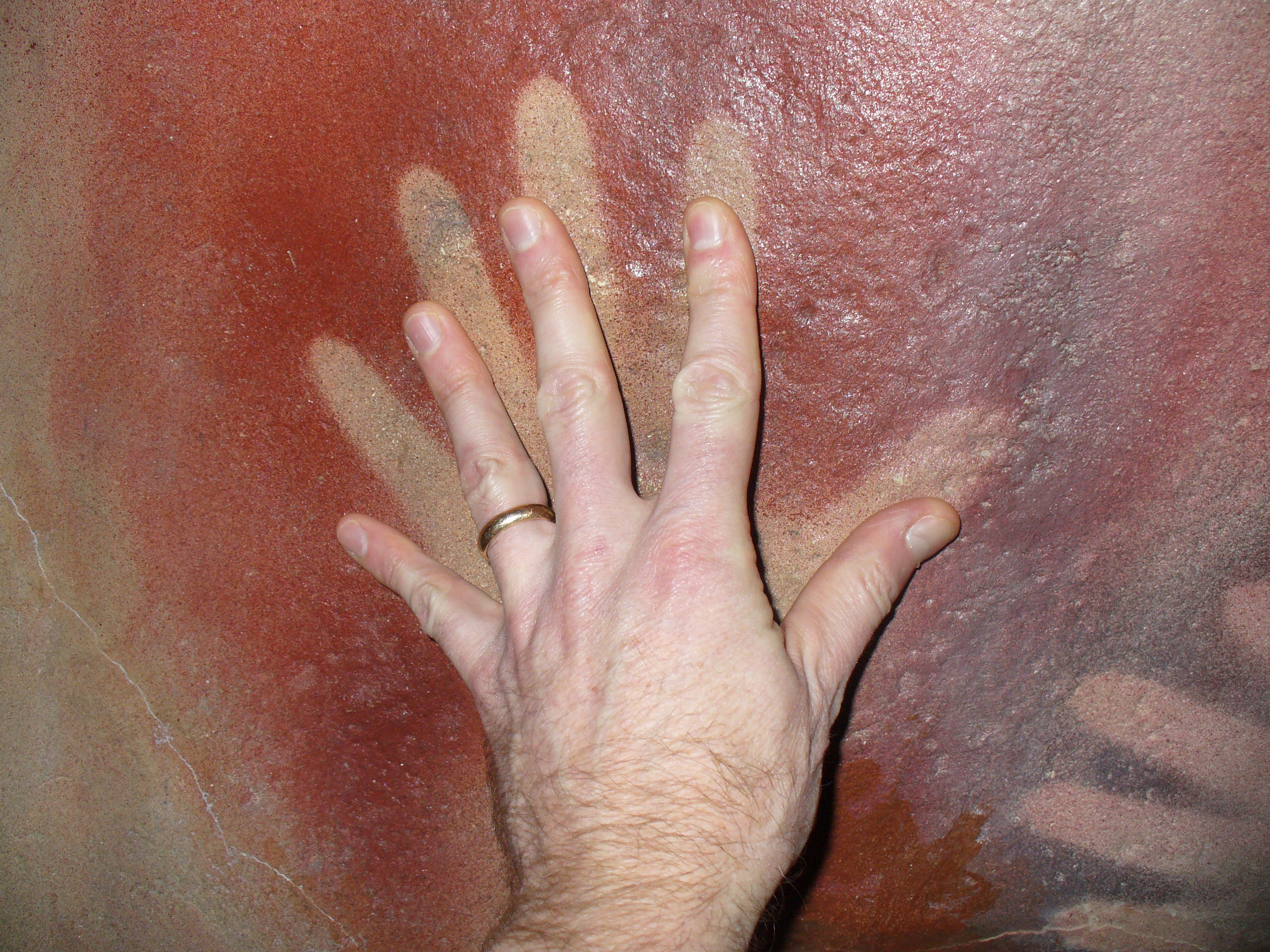
Making personal contact with cave art...
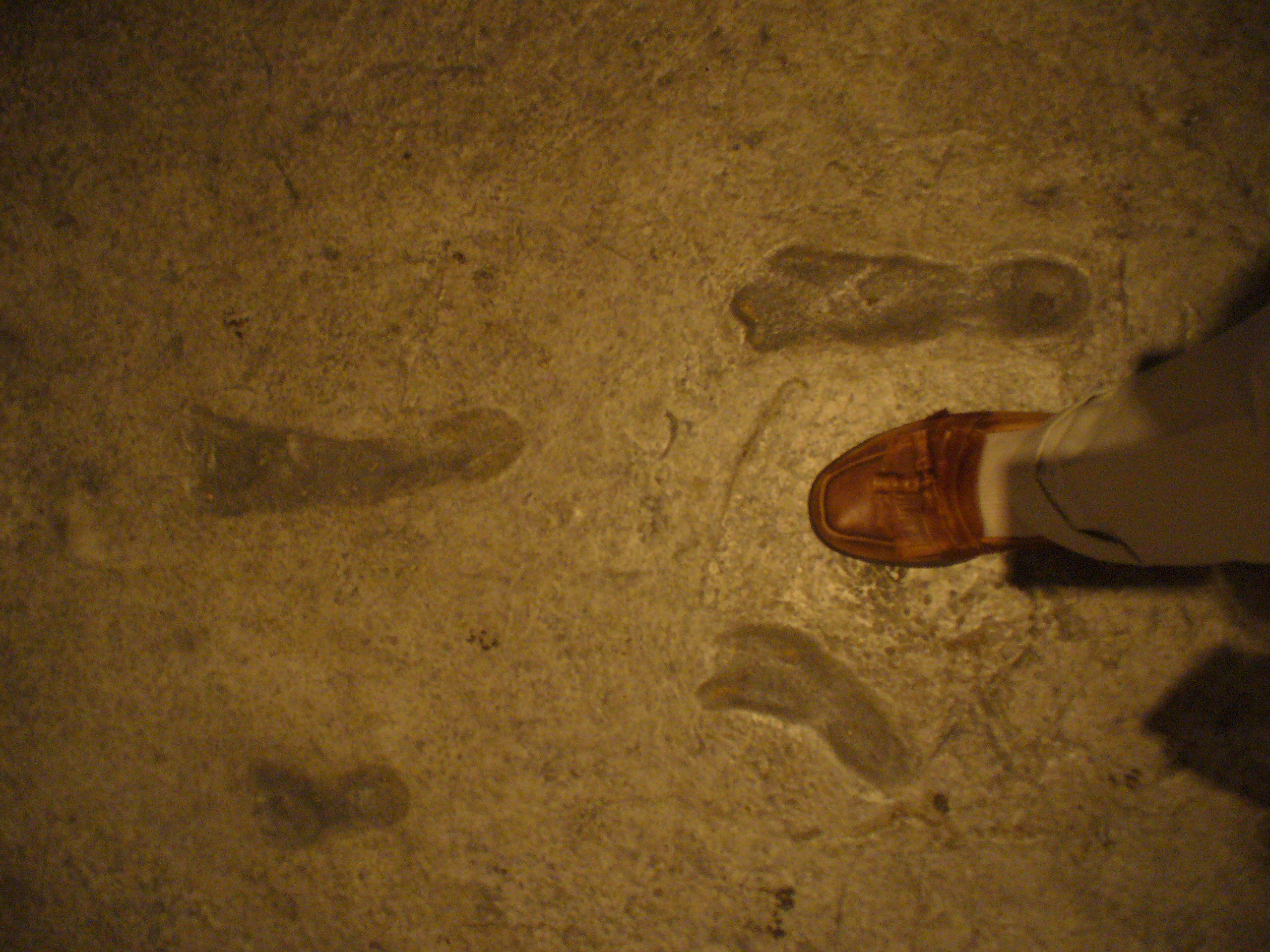
...and walking in the footprints of Lucy
Whale research at the Smithsonian
On Saturday, February 19, Professor Werth of the Hampden-Sydney Biology Department visited with Dr. Nick Pyenson, an expert on fossil whales and Curator of Fossil Marine Mammals at the Smithsonian Institution’s Natural Museum of National History. They examined fossil material of several extinct whale species, including the rare fossil shown here. It is hoped that H-SC Biology students can get involved with this work.
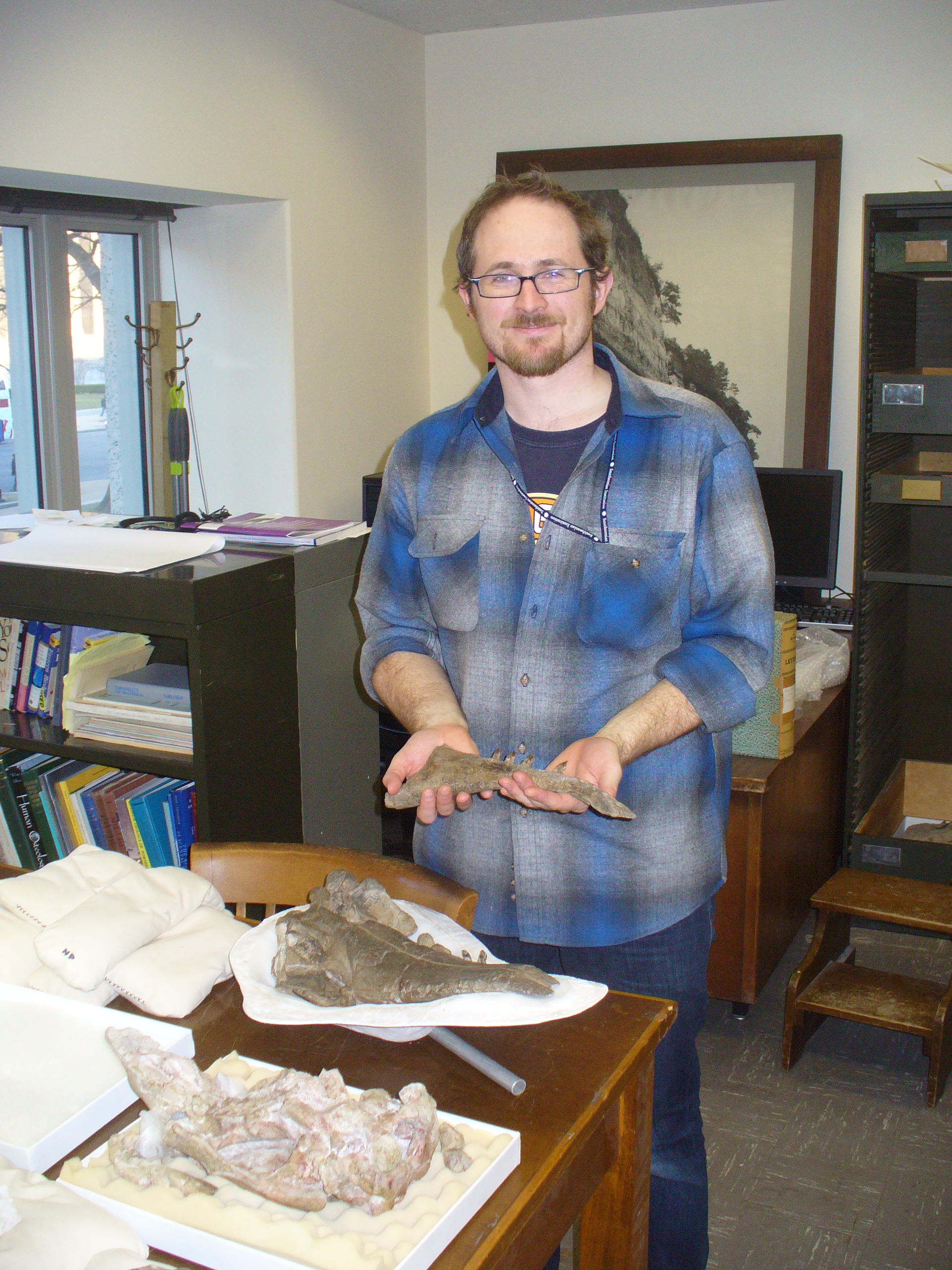
Dr. Nicholas Pyenson with rare fossil whale jaw
H-SC Virology Students Making Influenza Virus!
It’s that time of the year when most people want to avoid the flu. Well not the case for H-SC Virology students!!!! This semester students in Dr. Kristian Hargadon’s Virology class are employing cutting edge molecular genetic techniques to reconstruct an influenza virus strain that first struck Puerto Rico in 1934! Viruses are quite simple in structure, consisting of a core of genetic material surrounded by a protective protein coat (and in the case of influenza, an additional lipid envelope). Because viruses are so simple, they cannot replicate on their own and instead must infect a cell before they can be copied and spread to other cells. The virus achieves this by releasing its genome into a cell and using the cell as a factory to produce more virus copies. Therefore, if one were to put an influenza genome into a cell, theoretically the cell could “build” the actual virus on its own. Because the entire genome of the 1934 Puerto Rico influenza virus has been sequenced, this is exactly what H-SC students are doing. Provided with plasmids encoding the influenza genome at the beginning of the semester, students are using an approach known as reverse genetics to construct the 1934 Puerto Rico influenza virus by forcing these plasmids into cell lines they are growing in culture. Once they are done, these students will learn and employ a number of techniques commonly used in virology laboratories to measure how much influenza virus was made! This approach for generating influenza virus has been a remarkable breakthrough in molecular virology and has enabled scientists around the world to construct recombinant influenza strains in order to understand the role that unique influenza gene products play in infection and viral pathogenicity!
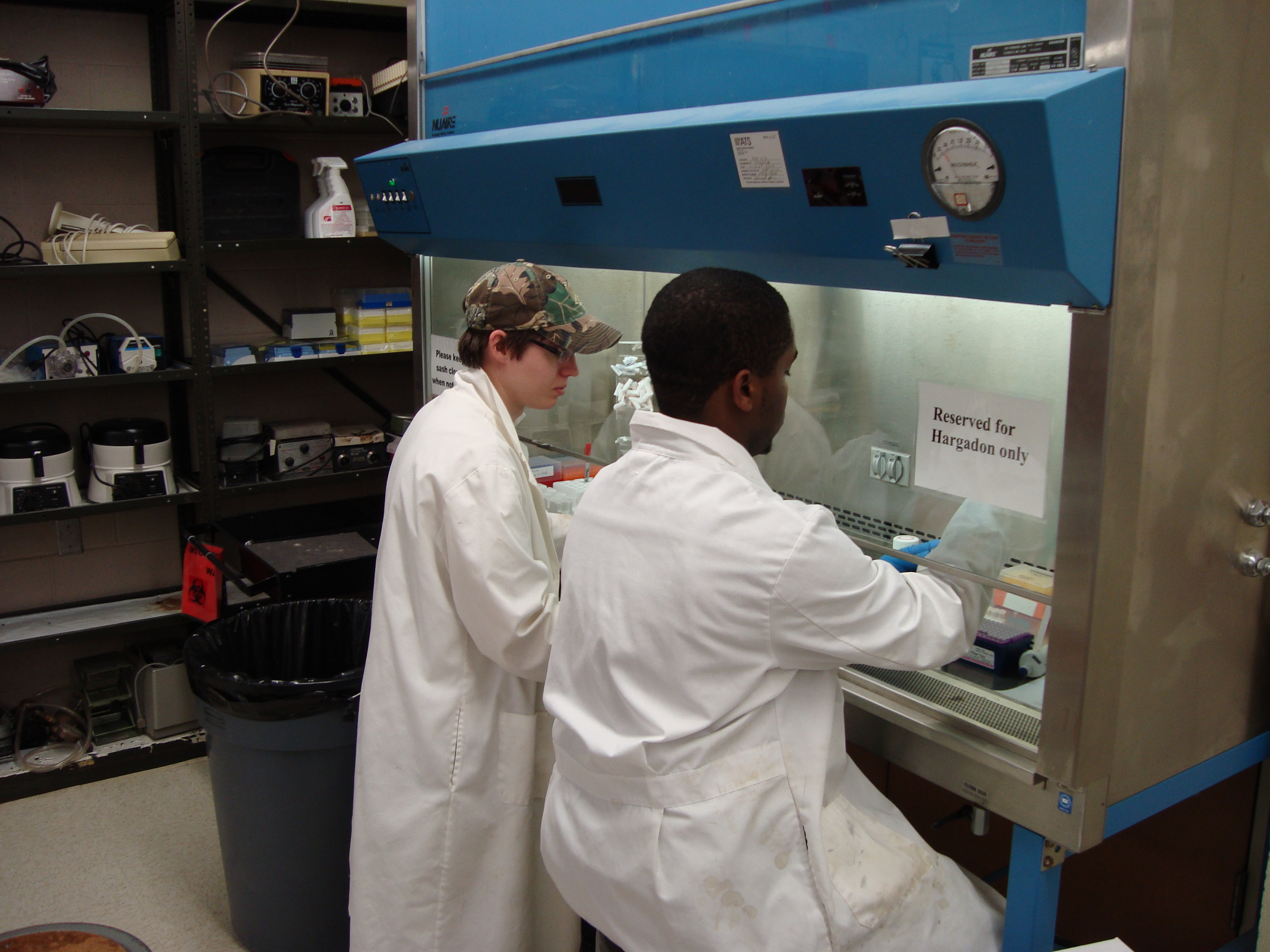
Virology students working to construct influenza virus in a laminar flow biosafety hood
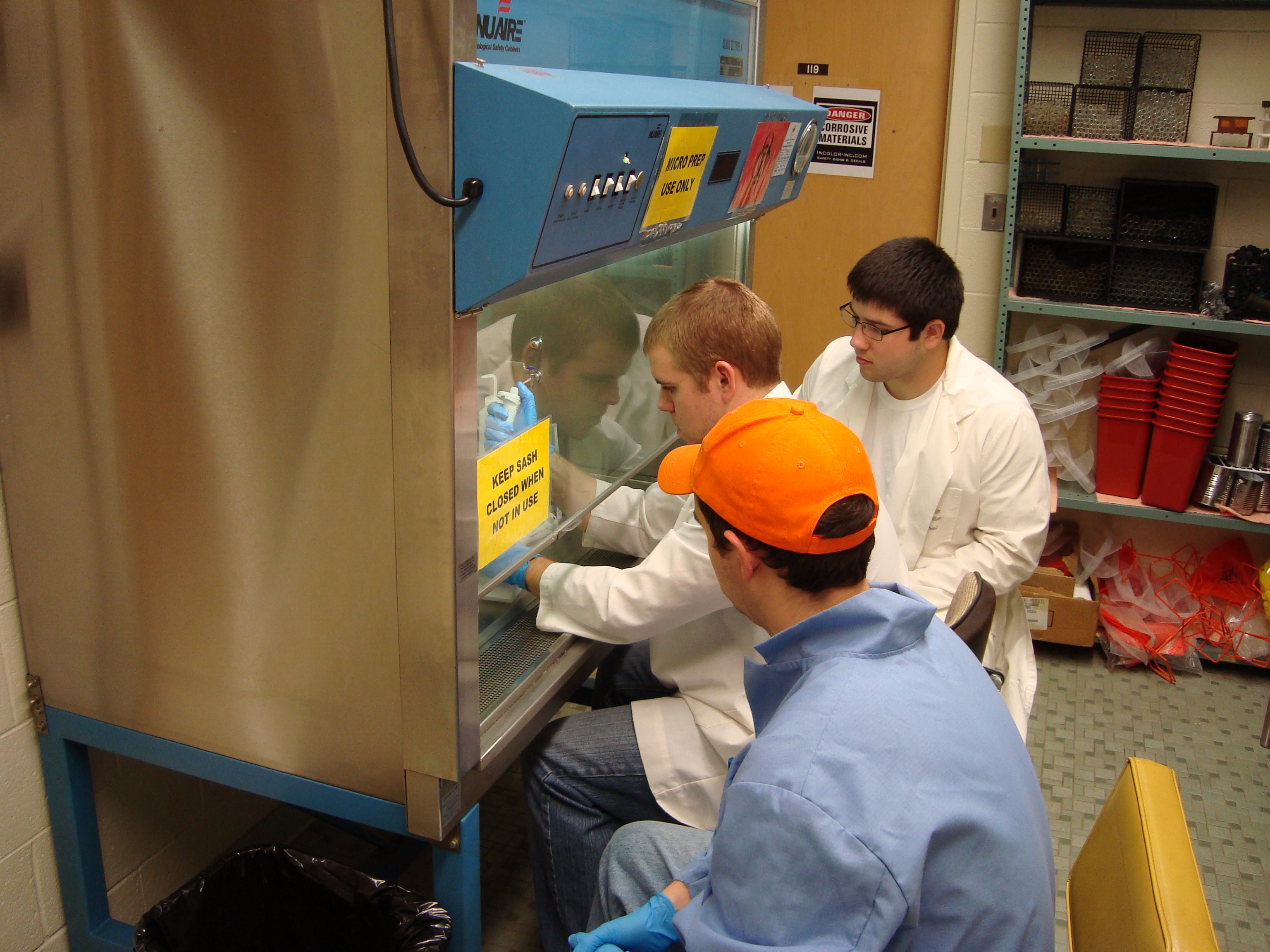
More future virologists hard at work!