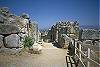
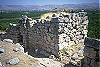
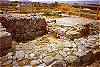
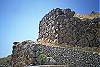
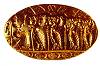
Tiryns, near the Argolic Gulf about 20 km south of Mycenae, was one of the great citadels of the Mycenaean world and, according to legend, the birthplace and home of the hero Heracles. It is famous above all for its massive “Cyclopean” fortification walls, in places up to 8 meters thick, so enormous that later Greeks believed only the mythical Cyclopes could have built them. The palace’s megaron, its great reception hall, had a throne set against the right wall and a central hearth ringed by four columns, much like the palaces at Mycenae and Pylos. The site was continuously inhabited from the Neolithic period through the Bronze Age, reaching its height between 1400 and 1200 BC, and is designated, together with Mycenae, a UNESCO World Heritage Site. [Editor’s note: no old-site source material was found for this page. This paragraph was drafted as a placeholder using general reference sources and should be reviewed/expanded by Dr. Siegel.]
Tiryns
Tiryns
Tiryns
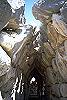
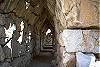
Corbelled roof, Tiryns
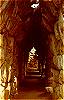
Storeroom of the archers, Tiryns
Storeroom of the archers, Tiryns
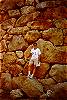
Cyclopean Wall, Tiryns
Cyclopean Wall, Tiryns
Possibly a bathroom, sloping floor and drain hole, Tiryns
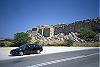
Mycenean citadel, exposing right side of approaching warriors, Tiryns