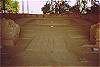
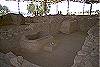
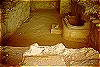
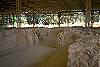
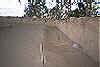
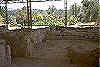
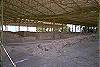
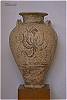
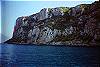
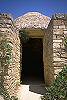
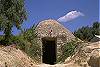
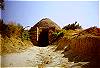
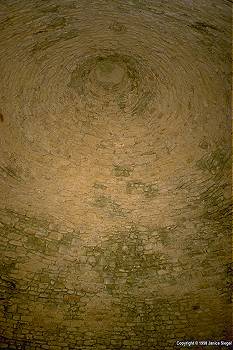
Pylos, on the southwest coast of the Peloponnese, is home to three sites of very different periods. Nestor’s Palace, a Mycenaean Bronze Age palace destroyed by fire around 1200 BC, is the best-preserved of all the Mycenaean palaces, and thanks to that fire, its archives of Linear B clay tablets survived baked and legible. Excavated rooms include the throne room, with its painted floor (famously reconstructed by artist Piet de Jong) and central hearth, as well as what is believed to be a bathroom with a built-in tub, and storerooms once stocked with wine and oil. The Battle of Sphacteria (425 BC), fought in the Bay of Navarino during the Peloponnesian War, was a rare and significant Athenian victory over Sparta. An Athenian force blockaded a group of Spartan soldiers on the island of Sphacteria; the resulting capture of Spartan hoplites so shocked Greece that Sparta sued for peace. Remains associated with the siege, including fortification walls attributed to the Athenian general Demosthenes, can still be traced on site. The area is also home to several Bronze Age tholos (beehive) tombs, corbelled stone burial chambers characteristic of Mycenaean elite burials. [Editor’s note: the original site had only brief photo labels for this page. This text was drafted as a placeholder and should be reviewed/expanded by Dr. Siegel.]
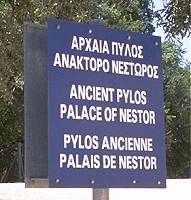
Palace of Nestor, Pylos
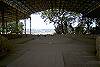
Throne room, Palace of Nestor, Pylos
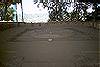
Hearth, Palace of Nestor, Pylos
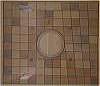
Painted floor of throne room (reconstruction by Piet de Jong), Pylos