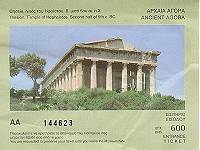
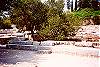
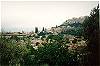
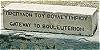
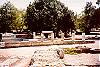
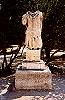
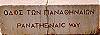
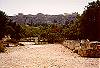
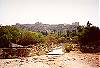
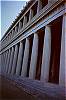
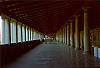
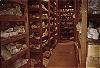
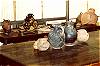
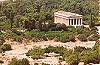
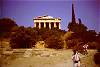
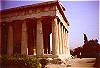
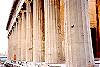
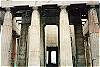
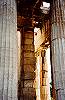
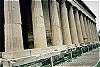
The Agora, below the northwest slope of the Acropolis, was the political, commercial, and social heart of ancient Athens – a gathering place for merchants, philosophers, and citizens conducting the daily business of the world’s first democracy. Its ruins include the Altar of the Twelve Gods, a central point from which distances across Attica were measured; the old and new Bouleuterion, meeting halls for the Council of 500; the Tholos, the round building where the presiding council members ate and even slept while on duty; the Metroon, sanctuary of the Mother of the Gods and keeper of the state archives; and the Monument of the Eponymous Heroes, where public notices were posted. The best-preserved building on site is the Hephaesteum, a Doric temple dedicated to Hephaestus, whose metopes depict the labors of Theseus and Heracles. The reconstructed Stoa of Attalos, a two-story colonnaded building, now houses the Agora Museum and its collection of artifacts recovered from the site, including voting equipment used in the world’s earliest experiment in citizen self-government. [Editor’s note: the original site had only brief photo labels for this page. This paragraph was drafted as a placeholder and should be reviewed/expanded by Dr. Siegel.]